
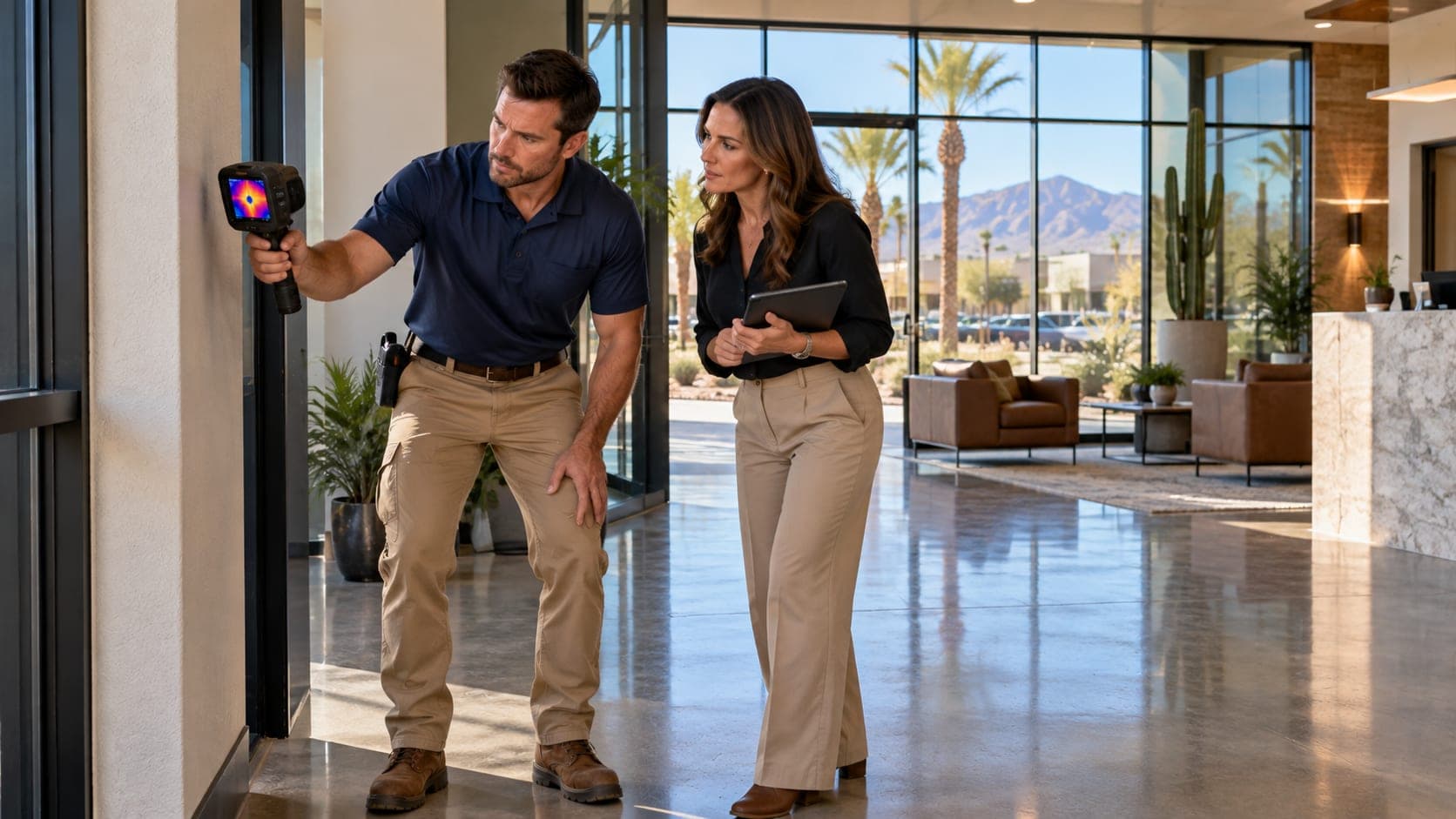
Nobody opens a business to become an expert in plumbing. Then a water bill arrives with an extra digit, or a tenant reports a smell, or a ceiling tile in the lobby develops a shadow, and suddenly everyone in the building is an amateur detective. We are the professional kind. Bring us in early and the story stays short.
What a commercial leak actually costs
The Environmental Protection Agency puts a number on the small stuff: a faucet dripping once per second wastes more than 3,000 gallons a year. Now scale that from one tap to a building, and from a drip to a cracked line under a slab or a failed irrigation main. The water bill is the first bill. The second is the flooring, the drywall, the inventory, and the equipment. The third is the downtime, and it is usually the largest.
3,000+ gal
wasted per year by one faucet dripping once a second
EPA WaterSense estimate. Commercial leaks are rarely that small.
10%
of buildings have leaks wasting 90 gallons or more per day
EPA household data; commercial systems are larger and older.
0 hours
of your operation shut down for our detection
We work around trading hours and off-shifts on request.
Where leaks hide in commercial buildings
Under the slab
Supply and hot-water loops routed through concrete. Warm floors, rising bills, and tenants who cannot say why the carpet feels wrong.
Irrigation and site mains
Acres of landscape line, often decades old, leaking into soil nobody looks at. This is the leak that shows up only on the bill.
Roof drains and monsoon entry points
Flat roofs, scuppers, and parapets. Water travels a long way along decking before it drips.
Mechanical rooms and risers
Boilers, chillers, and vertical stacks in multistory buildings. A leak on floor six shows up on floor four.
Restaurant and kitchen lines
Grease, heat, and constant use. Floor sinks, dish areas, and walk-in condensate lines fail quietly.
Pools, spas, and water features
Hotels, HOAs, and apartment communities. Evaporation hides a leak for months. Testing separates the two.
The building will tell you where the water is. It will not tell you where the leak is. That is the part we do.
How we work in an occupied building
- 1
Scope on the phone
Square footage, number of meters, what you have observed, and when we can have access. We quote the visit, not a mystery.
- 2
Schedule around you
Before opening, after close, overnight. We have done locates between a dinner rush and a breakfast prep.
- 3
Isolate and test
Pressure isolation by zone, acoustic correlation along mains, thermal survey of floors and ceilings, camera inspection of drains where the symptoms call for it.
- 4
Mark and document
Paint on the floor or flag in the ground, plus a written report with photos and a site sketch your contractor can work from.
- 5
Hand off cleanly
We refer licensed commercial plumbers we trust, or work with yours. Our findings are the same either way, because we do not sell the repair.
For property managers and facilities teams
You need three things from a leak detection vendor: a firm arrival window, a report you can forward without rewriting, and no surprises on the invoice. You get all three. Our reports are written for insurance adjusters, owners, and contractors who were not on site. If your portfolio has more than one building, ask about scheduled surveys. Finding a leak on a calendar beats finding it in a tenant's email.
We also offer private utility locating for capital projects, so nobody discovers the water main with an excavator bucket.
Commercial questions
Can you work without closing the business?
Almost always. Most detection is quiet and non-invasive. Where a brief water shutoff is needed for pressure testing, we schedule it for your slowest hour and tell you in advance.
Do you provide documentation for insurance claims?
Yes. Every job includes a written report with photos, location marks, and a description of what failed and why. It is written to be forwarded.
How do you price commercial work?
By scope, quoted before we arrive. Large sites and multi-building portfolios are quoted per visit or on a survey schedule. No hourly meter running while we look for the parking lot.
Do you handle multifamily and HOA properties?
Regularly. Apartment communities, condominiums, and HOAs with shared mains, pools, and irrigation are a large part of our commercial work.