
A house in Phoenix is a truce between water and the desert, and the desert is always negotiating. The sun bakes the ground until it cracks. The monsoon swells it back. Copper expands, contracts, and finally pinholes. Sprinkler lines water the dirt under the lawn instead of the lawn. None of this is anyone's fault. All of it ends the same way: a leak, somewhere you cannot see, doing work you did not authorize.
What we find in Phoenix homes
Slab leaks
Water under the foundation, eroding what holds the house up. Silent until the floor is warm or the bill is absurd. Read more about slab leaks.
Wall leaks
Pipes inside walls were never meant to leak. When they do: mold, rot, and swollen baseboards. We locate them without opening the wall first.
Underground leaks
Service lines, irrigation, and yard plumbing. Your yard should not be a marsh and your bill should not be a mortgage. Main line detail here.
Pool and spa leaks
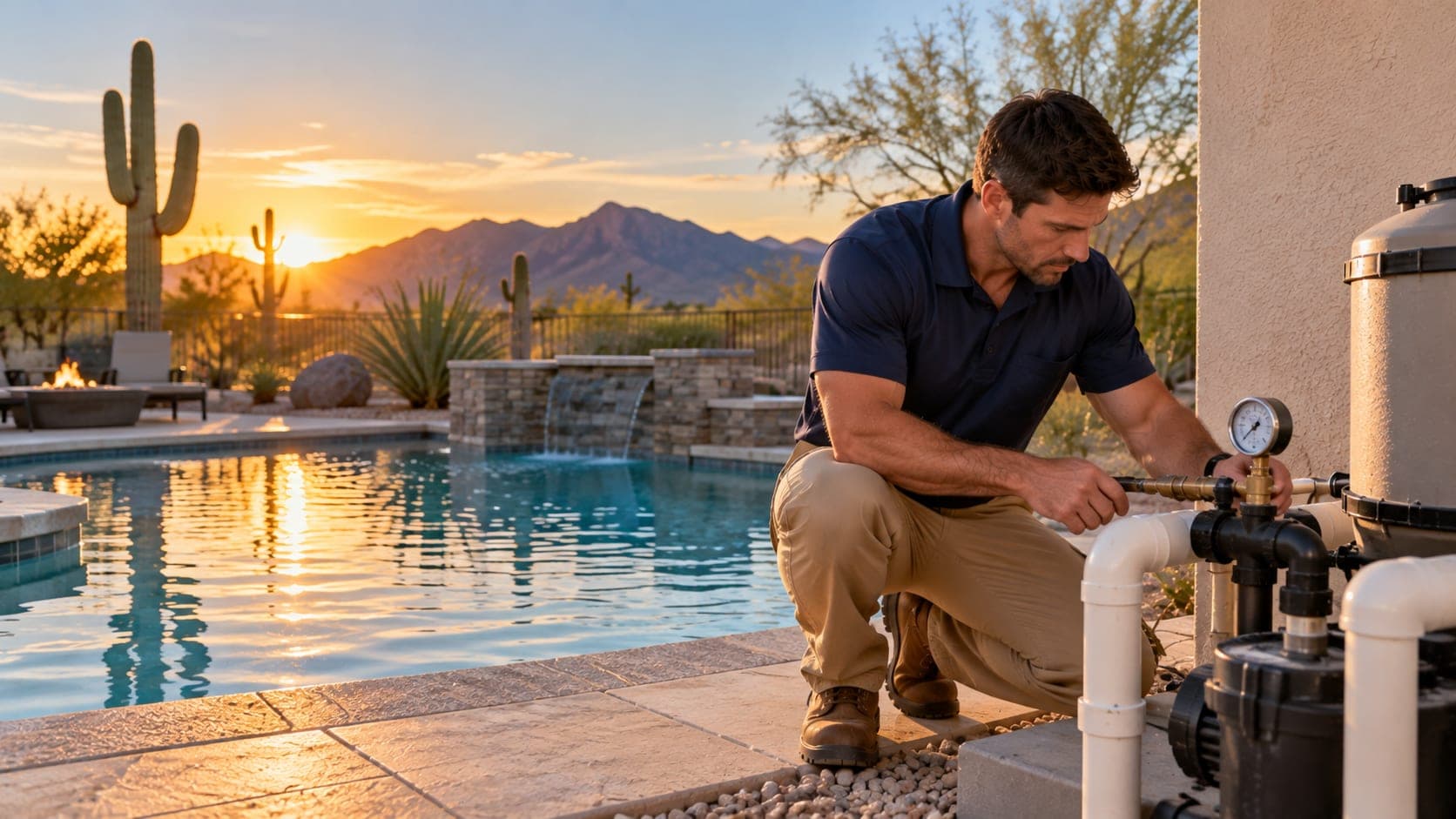
A pool in the desert is an oasis. A leaking one is a fountain pointed at your water bill. We test shells, plumbing, and equipment pads.
Roof and monsoon leaks
Rain finds a way in and travels along framing before it drips. We trace the drip back to the entry point, not just the stain.
Fixture and appliance leaks
Water heaters, ice makers, dishwashers, toilets. Small parts, large puddles. Often the cheapest fix, once found.
The tools, and why they are not toys
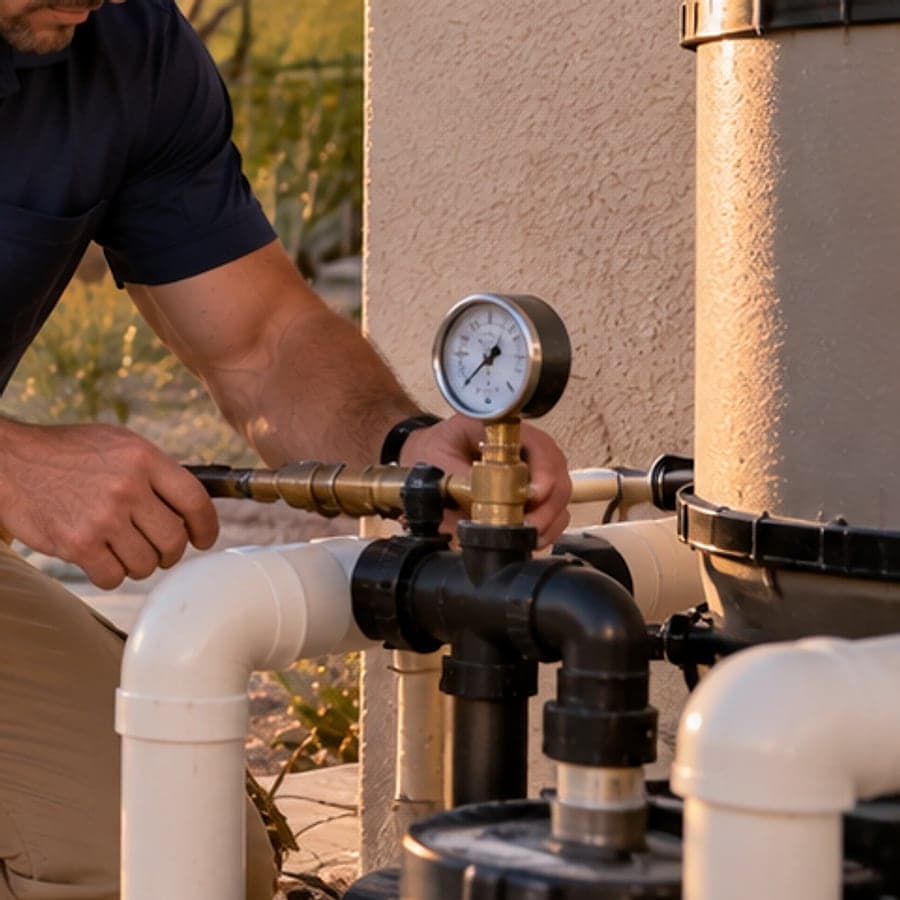
Good instruments in the wrong hands find nothing. Good instruments in trained hands find the leak in one visit. We carry acoustic sensors that hear water moving inside a pipe under concrete, thermal cameras that see the cool shadow a leak leaves in a wall, pressure gauges that tell us which line has lost its integrity, and ground-penetrating radar that reads what is under the slab before anyone cuts it. We bring the whole kit and use the one the leak demands.
Water leaves clues. The job is knowing how to read them, and it took years of Phoenix houses to learn.
How a residential locate goes
- 1
We listen to you
A drip, a hiss, a damp spot, a bill that doubled. The story usually points somewhere. We start there.
- 2
We look, then we look harder
The obvious places first, then the unlikely ones. Water rarely surfaces where it escapes. It flows, spreads, and shows up in the room next door.
- 3
We find the spot
Not the general area. The spot. Marked on the floor, the wall, or the yard, so the repair opens one small hole instead of three large ones.
- 4
We show you, in plain English
A written report with photos. What failed, where, and what it will likely take to fix. No jargon, no theater.
- 5
We hand you a name
We do not do repairs. That is not our job, and keeping it separate keeps us honest. We refer plumbers we trust and would use in our own homes.
Signs your house is trying to tell you something
- A water bill that jumped with no new habits to explain it.
- Damp spots on walls, ceilings, or floors that do not dry.
- The sound of running water when every faucet is closed.
- Warm spots on the floor. Hot-water slab leaks heat the concrete. You can feel it in socks.
- Cracks in the foundation or doors that suddenly stick.
- Mold, mildew, or a musty smell in a room that used to smell like nothing.
- A lush green patch in the yard when the rest of the lawn is minding its own business.
None of these prove a leak. All of them earn a phone call. We check, we know, and we tell you the truth even when the truth is “it was the sprinkler timer.” That happens, and it is a good day for everyone. Read the full list in our guide to the signs of a leak.
Why homeowners choose us over the guy with the flashlight
Anyone can point at a wall. What you are paying for is certainty: the confidence to let a plumber cut one hole, in the right place, and be done. That certainty comes from instruments, from training, and from having seen the same failure a few hundred times in the same kind of house. It also comes from our refusal to sell you the repair. Our only product is the answer.
Questions from homeowners
Will you have to cut into my walls or floors?
Almost never for detection. Our methods are non-invasive. The plumber will need to open the spot we mark to make the repair, but one small opening in the right place beats several large ones in the wrong ones.
How long does a residential locate take?
Usually one to three hours, depending on the size of the house, the number of lines, and how coy the leak is being. Intermittent leaks sometimes take longer. We tell you if we are heading into a long one.
Can you find a pool leak?
Yes. Pools leak through the shell, the plumbing, or the equipment pad, and each needs a different test. We do all three.
What should I do before you arrive?
Clear access to the meter, the water heater, and any room where you have seen water. Turn off sprinklers. Have your last two water bills handy if you can.