
Picture the water. It leaves a copper line through a hole smaller than a pencil lead, a foot beneath your kitchen floor, at seventy pounds of pressure. It does not gush. It seeps, all day and all night, into caliche and clay. It has done this for weeks by the time the bill arrives. It will do it for months more if the bill is blamed on the pool. Slab leaks are patient. That patience is precisely what makes them dangerous.
What a slab leak is, and why Phoenix grows them
Most Phoenix homes sit on a concrete slab poured directly over the soil, with water lines running through or beneath it. Those lines are copper, or in older homes galvanized steel, and in newer ones flexible plastic. Copper and the desert have a difficult relationship. Hard water scours it from the inside. Soil chemistry and stray current corrode it from the outside. Expansive clay swells with the monsoon and shrinks in May, grinding the pipe against concrete and rebar. Add a few decades and a pinhole is almost a scheduled event.
Hot-water lines fail first, because heat accelerates everything. That is why the earliest sign is often a warm spot on the tile. The floor is not telling you the house is cozy. It is telling you where the pipe gave up.
The signs, in the order homeowners usually notice them
The water bill jumps
Same habits, bigger number. The meter records what the eye cannot see. If the bill climbed and nothing else changed, start here.
A warm spot on the floor
Hot-water slab leaks warm the concrete above them. Walk the house barefoot. Where it is warm for no reason, the pipe is speaking.
The sound of water with everything off
A faint hiss or rush from the floor or a wall when no fixture is running. Quiet houses make this obvious. Loud households miss it for months.
Damp or warped flooring
Moisture wicks up through the slab. Laminate lifts, tile grout darkens, carpet pads never quite dry.
Mildew where there was none
A musty smell in a closet or hallway with no plumbing in sight. The water is under the room, not in it.
Cracks and sticking doors
Wet soil under one part of a slab settles differently than dry soil under another. Doors bind. Hairline cracks appear at corners. This is late, and it is the expensive stage.
Every drop that leaves the pipe goes into the soil that holds your house up. Slab leaks are not a plumbing problem that becomes a foundation problem. They are both, from the first day.
How we find it without a jackhammer
The old method was to guess, break the floor, and guess again. We do not own a guessing tool. We own instruments.
- 1
Confirm the leak exists and which system it is on
A pressure test isolates the hot side from the cold side and both from the irrigation. A leak on the hot side alone changes the search area immediately.
- 2
Listen along the line
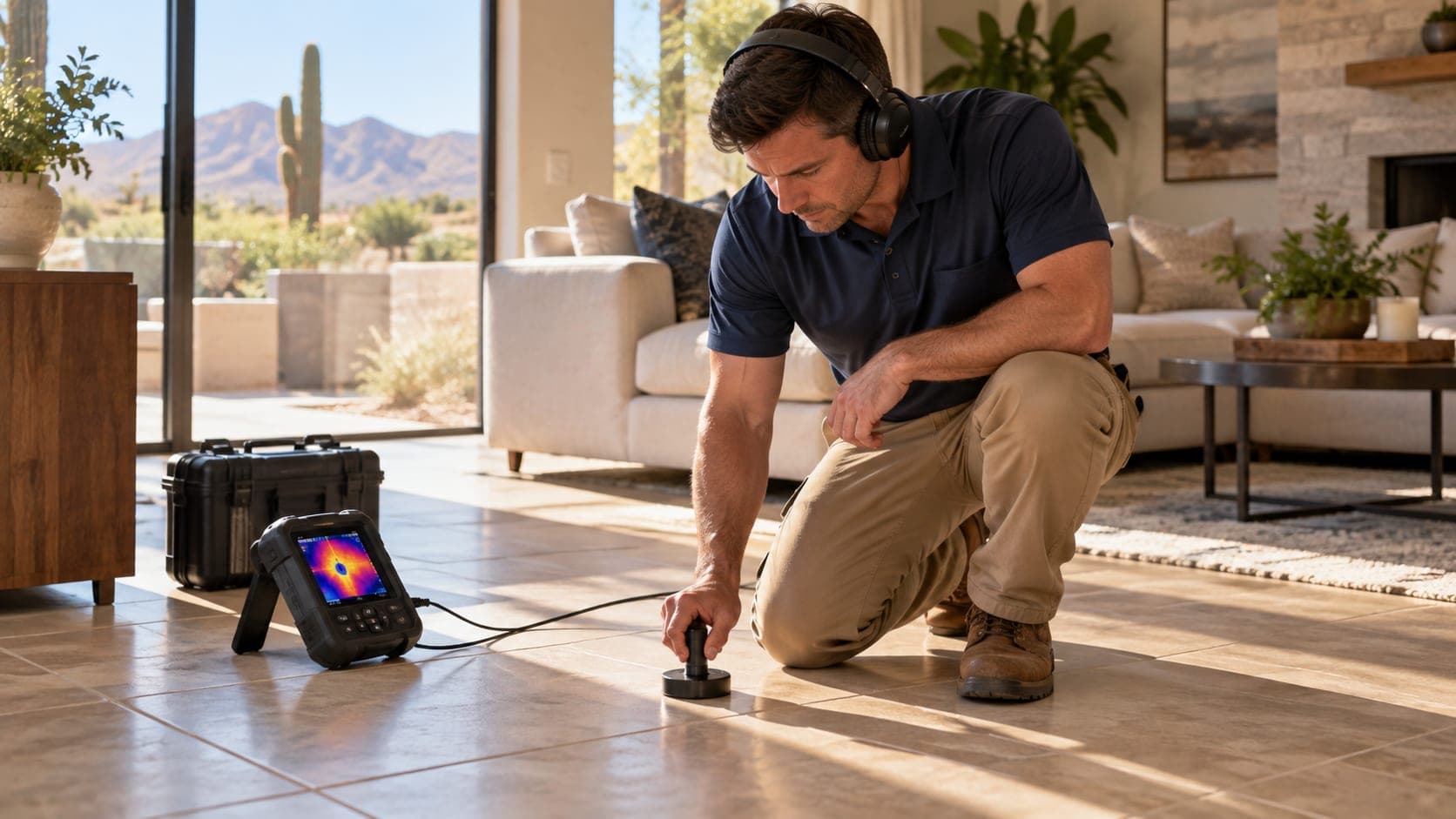
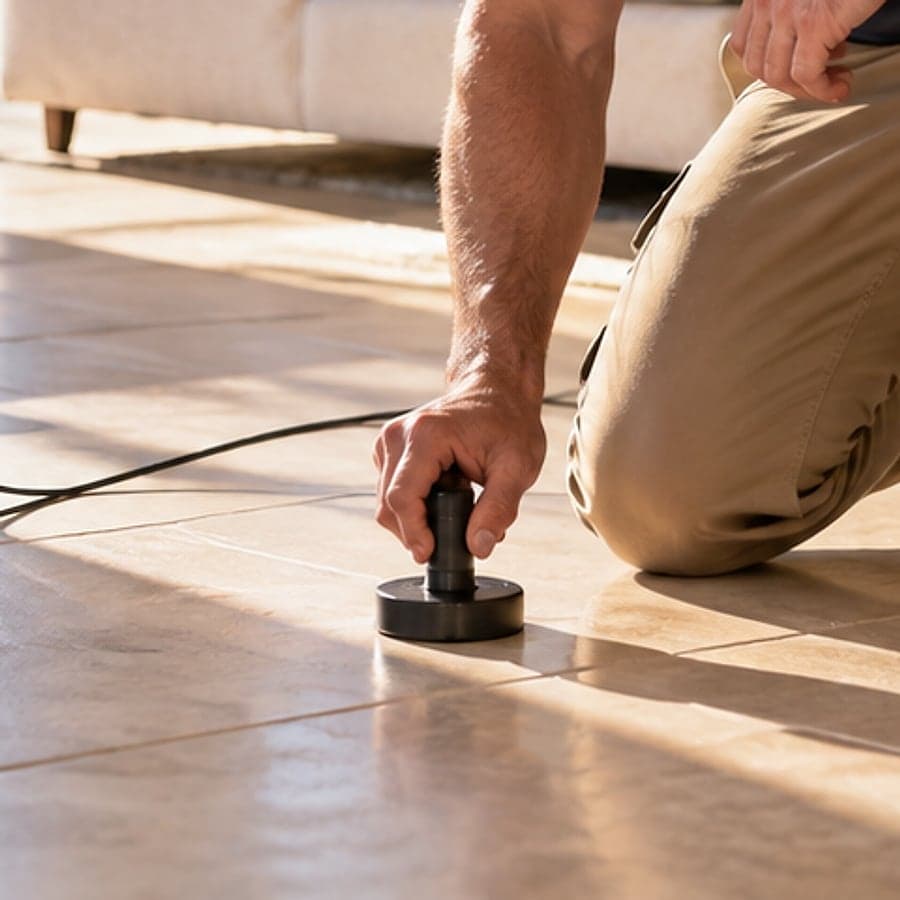
Acoustic sensors hear pressurized water escaping through a pinhole, even through concrete and tile. We trace the line and find where the sound peaks.
- 3
See the heat
A thermal camera shows the warm plume a hot-water leak spreads through the slab. It is often the fastest way to shrink the search from a house to a square foot.
- 4
Confirm and mark
We correlate the acoustic peak, the thermal signature, and the pipe route, then mark the spot on the floor. The plumber opens one hole in the right place.
- 5
Document it
Photos, a sketch, the line affected, and repair options: spot repair, reroute overhead, or repipe. We explain the trade-offs. You decide with real information.
Repair options, explained without pressure
There are three common paths after a slab leak is located. A spot repair opens the slab at our mark, fixes the failed section, and closes it back up. It is the least expensive and makes sense when the pipe is otherwise healthy. A reroute abandons the buried line and runs new pipe through the attic or walls, avoiding the slab entirely. It costs more up front and eliminates the next slab leak on that line. A repipe replaces the home's plumbing altogether. It is the right call when copper is old, repairs are stacking up, and you intend to stay.
We do not perform any of these. We locate, we document, and we refer plumbers we trust. That separation is deliberate. A locator who profits from the repair has a reason to find a bigger problem. We do not have that reason, and our findings show it.
Slab leak questions
Can you find a slab leak without breaking the floor?
Yes. That is the entire point. Acoustic listening, thermal imaging, and pressure isolation locate the leak from above. The only concrete that gets opened is the small area the plumber cuts to make the repair.
How accurate is the location?
Typically within a foot or two, and often tighter. Accuracy depends on pipe depth, material, and how much the leak is flowing. We tell you our confidence, not just a mark.
Does homeowners insurance cover slab leaks?
Policies vary. Many cover the resulting water damage and the cost of accessing the leak, while excluding the pipe repair itself. Our report is written to support the claim. Call your agent before the repair, not after.
How much water does a slab leak waste?
A pinhole at household pressure can lose a gallon an hour or more, which is over 700 gallons a month into the soil under your house. Larger failures lose far more. The bill is usually the first honest witness.
Should I just repipe the whole house?
Sometimes. If the copper is decades old and this is the second or third leak, a repipe or reroute may be cheaper than the next three spot repairs. We lay out the trade-offs plainly and leave the decision to you.