
Sewer lines are the least glamorous plumbing in a house and, when they fail, the most consequential. A supply leak wastes clean water. A sewer leak releases the other kind, into the soil under your foundation and the air in your hallway. It undermines slabs, invites roots and pests, and offends everyone within smelling distance. It also tends to be ignored the longest, because nobody wants to think about it. We think about it professionally, so you do not have to.
Why sewer lines fail in the desert
Older Phoenix homes drain through cast iron or clay. Cast iron rusts from inside until the bottom of the pipe is a memory. Clay joints separate as the soil moves, and every separated joint is an open invitation to a tree root. Newer homes use plastic, which is better but not immune: it can belly where soil settles, leaving a low spot that collects waste and eventually cracks. Expansive clay soil, the same villain behind slab leaks, shifts everything a little each season. Sewer lines run downhill by design, and a small shift can undo the slope.
The signs
Slow or gurgling drains
More than one at a time. A single slow sink is a clog. Several slow drains, or a toilet that gurgles when the tub empties, point to the main line.
A sewer smell
In the house, in the yard, or from a floor drain. Wastewater has a signature. If you can smell it, it is escaping somewhere it should not.
Soggy or sunken ground
A wet, soft, or sunken strip in the yard that follows the line's route. The grass may be suspiciously healthy along it.
Foundation cracks or settling
Wastewater washes out soil under a slab. The slab follows. Cracks, sticking doors, and uneven floors are late-stage symptoms.
Pests
Roaches and rodents follow moisture and food. A leaking sewer line supplies both.
Backups
Waste coming up a floor drain or tub is the line telling you it has stopped flowing downhill. Call before it happens twice.
A supply leak wastes clean water. A sewer leak hands you the other kind. The order of urgency is not close.
How we find it
- 1
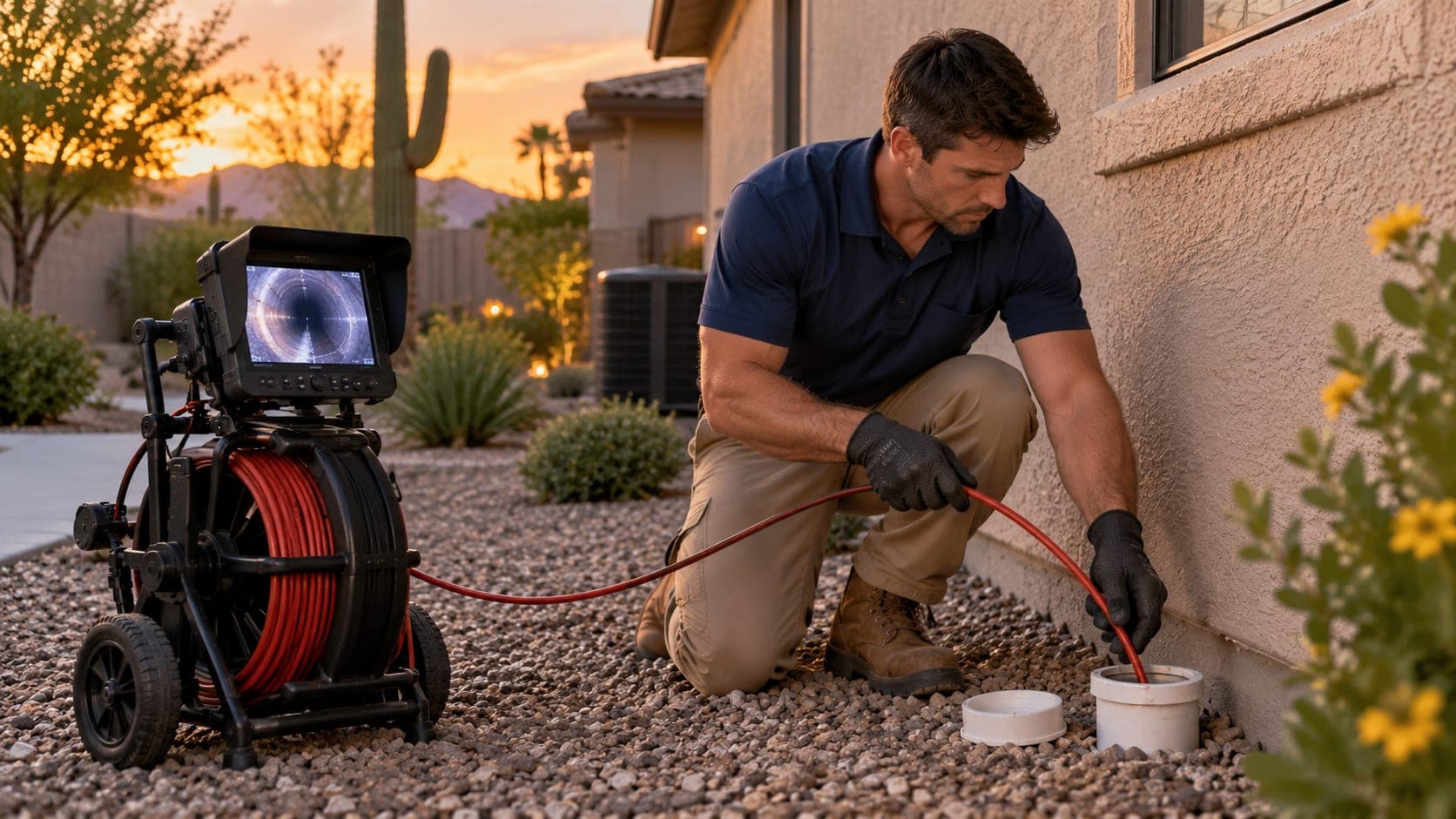
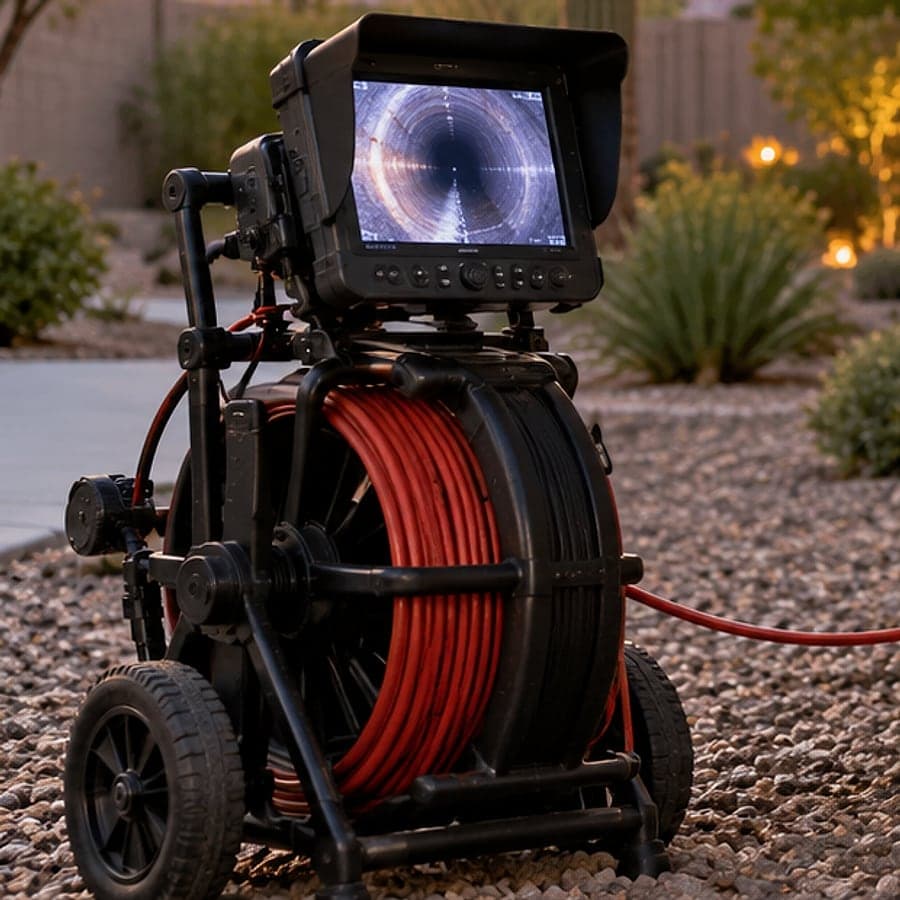
Camera inspection
A small camera on a flexible cable travels the line from a cleanout. We see the inside of the pipe in real time: cracks, offsets, root intrusion, bellies, and breaks. A transmitter in the camera head lets us locate it from the surface.
- 2
Locate from above
Once the camera finds the defect, we trace its position and depth from the surface and mark it. The repair crew digs one hole at the mark.
- 3
Smoke or dye testing, when needed
Non-toxic smoke pushed into the line escapes at cracks and shows above ground. Dye in a fixture shows where flow exits. These confirm leaks the camera cannot see directly.
- 4
Acoustic methods for pressurized lines
Where a sewer line is pressurized, such as an ejector or lift station discharge, acoustic listening locates the leak the same way it does on water mains.
- 5
Report with video
You get the footage, the location, the depth, and a plain-English description of what we found. Contractors and insurers can work from it directly.
Prevention that actually works
- Keep grease, wipes, and paper towels out of the line. Wipes marked flushable are flushable in the sense that a shoe is flushable.
- Manage roots. Trees near the line will find it. Root barriers and periodic cutting are cheaper than a broken pipe.
- Inspect before you buy. A camera inspection during escrow has saved more than one buyer from a five-figure surprise.
- Repair early. A cracked joint is a small job. A collapsed line under a slab is a large one.
Sewer line questions
Is a sewer line leak dangerous?
Yes, on two fronts. Wastewater carries bacteria and can contaminate soil and groundwater, and it washes out the soil that supports your foundation. Treat it as urgent.
How do you know where the leak is without digging?
The camera finds the defect from inside the pipe, and a transmitter in the camera head lets us locate its exact position and depth from the surface. Digging is for the repair only.
Can roots really break a pipe?
Roots do not so much break pipes as exploit them. A hairline crack or a separated joint leaks moisture. Roots follow it in, grow, and pry the opening wider each season until the pipe fails.
Do you repair sewer lines?
We locate and document. Repairs, including trenchless lining and pipe bursting, are done by licensed plumbers, and we can refer ones we trust.