
Scottsdale runs the length of the Valley's east side, and its plumbing ages as you drive north. South Scottsdale and Old Town are 1950s and 60s ranches, many on the original copper, some on galvanized, sitting on slabs that have felt sixty monsoons. McCormick Ranch and the 70s and 80s belt around Shea are copper under slab with a generation of hot-water pinholes behind them. North of the 101, DC Ranch, Grayhawk, Troon, and the newer desert subdivisions are on modern pipe, but they have something the old neighborhoods do not: acres of irrigation and lots so large that a leak can run into the ground for months and never surface.
What leaks look like in Scottsdale
Slab leaks south of Shea
Warm tile in a hallway of a 1968 ranch is the classic call. The hot line under the slab has finally worn through. We locate it to the square foot without lifting the terrazzo.
Pool and spa plumbing
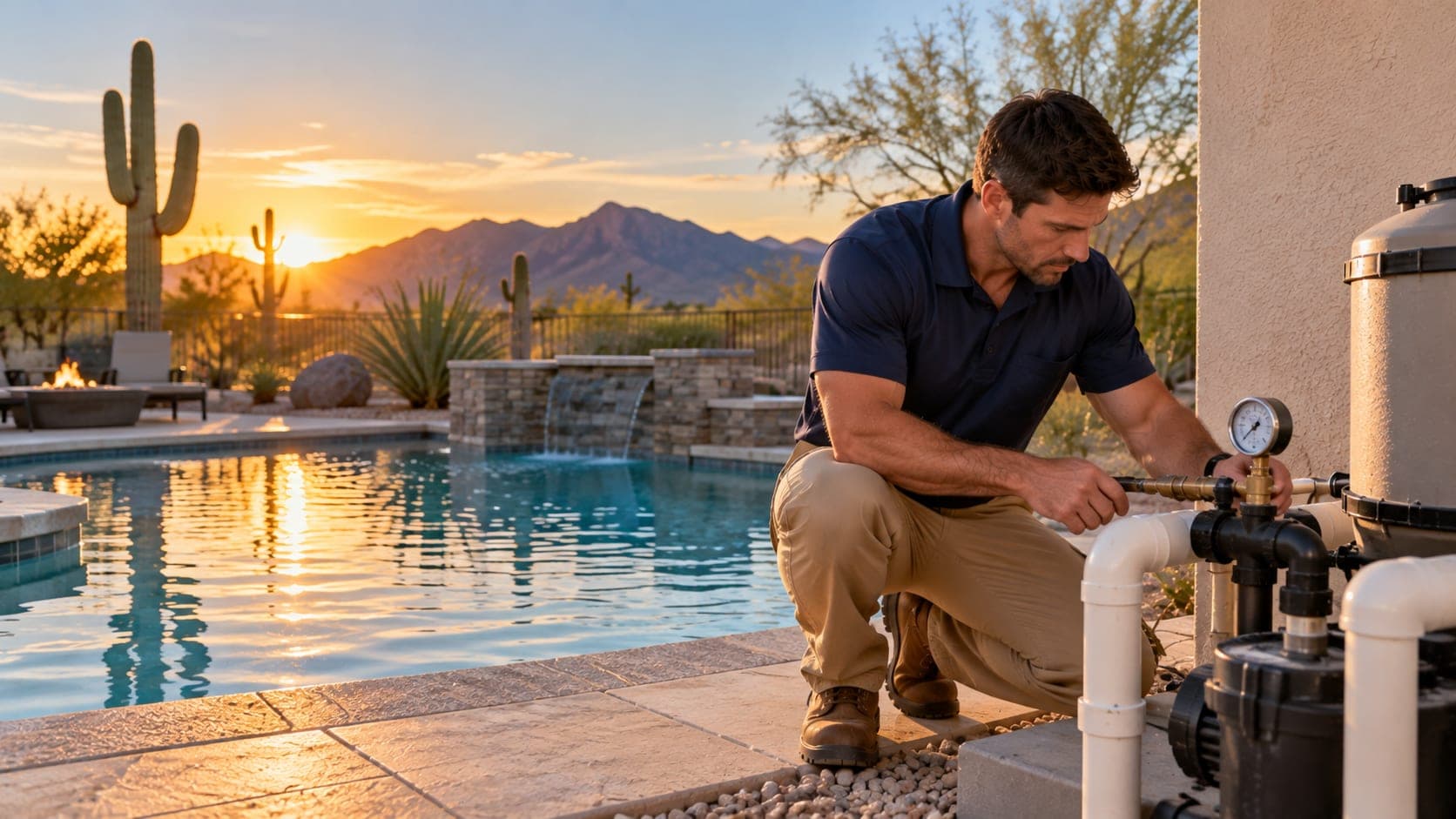
Scottsdale pools are large, old, and often remodeled. Skimmer lines, returns, and spa jets fail underground. We pressure-test each line separately so the repair opens one spot on the deck.
Irrigation on desert lots
Drip and bubbler mains running a quarter mile around a lot. A cracked fitting under gravel is silent and invisible, and it shows only on the water bill.
Long service lines
North Scottsdale homes sit far back from the street. A leak between the meter and the house has a long run to hide in. We trace the line first, then listen.
Resorts, HOAs, and retail
Common-area mains, water features, and restaurant slabs. Off-hours isolation so guests never notice.
Hillside and rock lots
In the foothills the pipe sits in fractured rock and fill. Leaks travel along the rock and appear far from the source. Correlation, not guessing, finds the origin.
On a Scottsdale lot, the yard is a sponge and the bill is the only witness.
The Scottsdale water bill test
Scottsdale Water meters carry a low-flow indicator, and Scottsdale bills are large enough that a leak is easy to miss inside a normal summer number. Compare this month to the same month last year, not to last month. Irrigation swings the bill; a leak adds to it in every month. If the year-over-year number climbed and the household did not change, close every valve on the property and watch the meter. If it turns, call. If it does not, look at the pool autofill and the irrigation controller before you look at anything else.
How we work a Scottsdale property
- 1
Isolate by system
House, irrigation, pool, spa, water feature. On a large lot this step alone takes a leak from anywhere on an acre to one line.
- 2
Trace before listening
We map where the line actually runs, which on a custom lot is rarely where the drawings say.
- 3
Correlate on long runs
Two sensors, one at each end, and the math tells us the distance to the leak. It works under pavers, gravel, and pool decks.
- 4
Report for the HOA and the insurer
Photos, a site sketch, and depth. Written so a landscaper, a pool contractor, or an adjuster can act on it without a second visit.
Scottsdale leak detection questions
Can you find a leak under pavers or a pool deck without removing them?
Yes. Acoustic correlation reads through pavers, concrete, and travertine. We mark the spot on the surface and the contractor lifts only what is needed.
My pool loses water in summer. Leak or evaporation?
Scottsdale evaporation in July can exceed a quarter inch a day, so the bucket test settles it: a bucket on the step, filled to match the pool, for twenty-four hours with the pump off. If the pool drops faster than the bucket, it is a leak, and we find which line.
Do you cover all of Scottsdale?
From the Tempe border to Carefree Highway, including Old Town, McCormick Ranch, Gainey, DC Ranch, Grayhawk, Troon, and the Pinnacle Peak foothills.